AI Glasses vs AR Glasses: What’s the Difference?
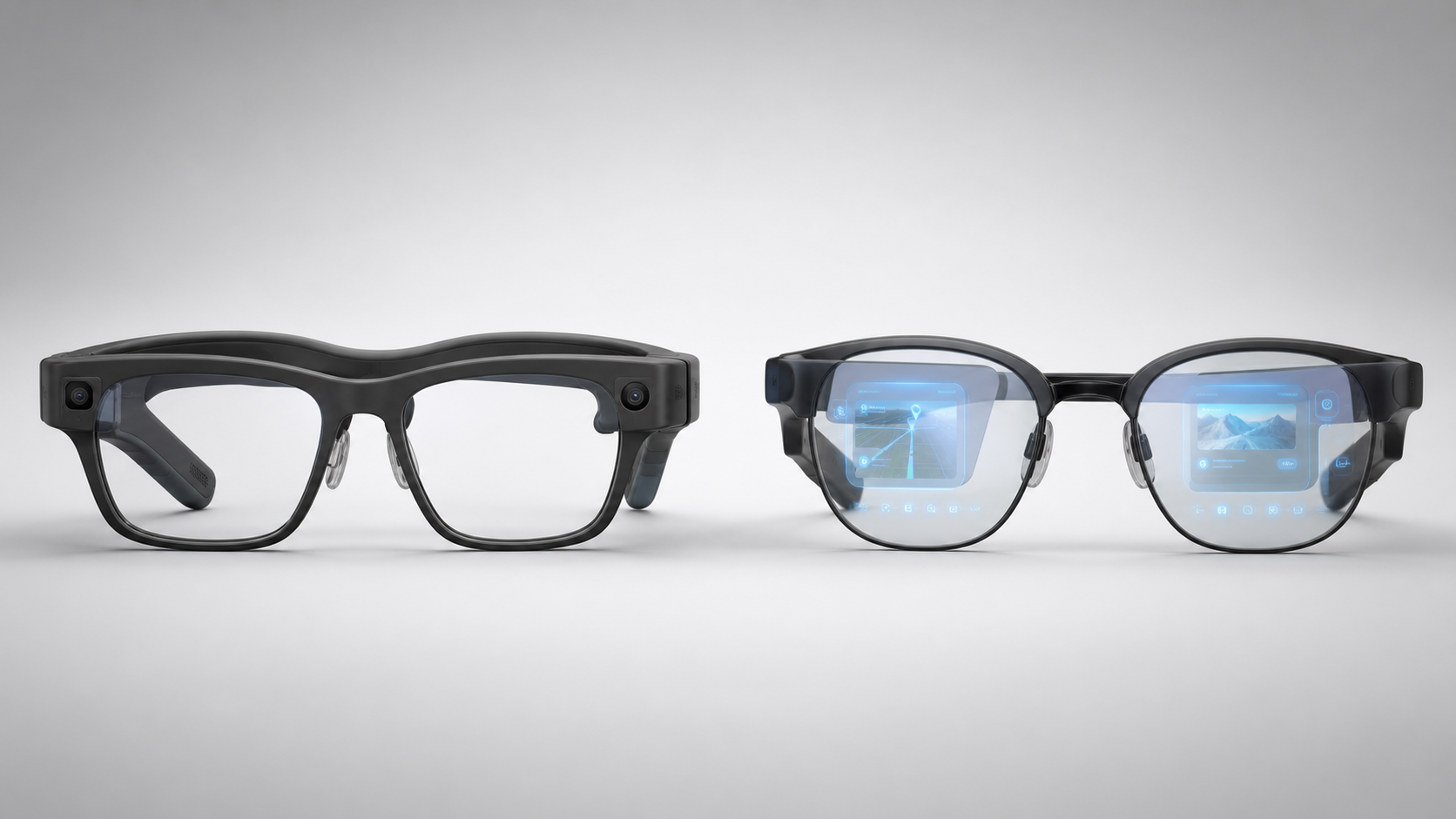
AI glasses and AR glasses are often discussed as if they are the same thing, but buyers should treat them as different product categories. The overlap is growing, especially as AI assistants move into eyewear, but the buying decision is still different.
The short version: AI glasses focus on hands-free intelligence, while AR glasses focus on visual overlays or wearable displays. Some products may eventually combine both, but many current models lean clearly toward one side.
Sources reviewed include Google Blog and official product pages.
Quick Answer
Choose AI glasses if you want voice help, open-ear audio, camera capture, translation, calls, and assistant features in normal-looking frames. Choose AR glasses if you want to see digital information, use a wearable screen, watch media, play games, or experiment with spatial computing.
In 2026, the most important buying question is not whether the product is called “AI” or “AR.” It is whether you need a camera and assistant, a display, or both.
What Are AI Glasses?
AI glasses are smart glasses designed around assistant features. Depending on the model, they may include microphones, speakers, cameras, touch controls, phone pairing, cloud AI, and sometimes a small display.
Typical AI glasses features include:
- Asking an AI assistant questions by voice
- Taking photos or short videos from a first-person view
- Making hands-free calls
- Listening to music, podcasts, and navigation prompts
- Getting help with translation or visual questions where supported
- Using a phone app for setup, media transfer, and updates
Ray-Ban Meta-style smart glasses are a good example of the camera and audio side of the category. Google’s 2026 intelligent eyewear announcement also shows where the market is going: Gemini-powered eyewear with audio glasses first and display glasses as a second type.
What Are AR Glasses?
AR glasses focus on placing digital information in your field of view. That may mean simple captions, navigation prompts, notifications, or a larger virtual screen for media and work.
Some AR glasses are lightweight display glasses that connect to a phone, computer, console, or adapter. Others are closer to spatial computing devices. They may not have cameras, and they may not include a strong AI assistant by default.
XREAL is one example of a display-first AR glasses brand. Its product lineup highlights AR glasses, wearable display use, and accessories that connect glasses to apps and devices.
Feature Comparison
| Feature | AI glasses | AR glasses |
|---|---|---|
| Main goal | Hands-free assistant, audio, capture, and everyday help | Visual overlays, wearable screen, spatial or display experiences |
| Display | May have no display, a simple display, or future display options | Usually built around a display or visual overlay |
| Camera | Common on camera smart glasses, but not always required | May be absent on display-first glasses |
| Audio | Often important for voice assistant, calls, and open-ear listening | May support audio, but display is usually the main feature |
| Best for | Travel, calls, quick capture, assistant use, translation, everyday wear | Movies, gaming, portable monitor use, captions, maps, spatial apps |
| Main tradeoff | Privacy concerns, limited battery, region-dependent AI features | Comfort, field of view, compatibility, price, and display quality |
Which Should You Buy?
Buy AI glasses if you want a device that behaves more like a wearable assistant. This makes sense for users who want short first-person clips, hands-free calls, open-ear audio, or fast voice access without taking out a phone.
Buy AR glasses if you want a screen in front of your eyes. This makes sense for travel entertainment, gaming, portable monitor use, private viewing, or experimenting with visual overlays.
Wait if you want one normal-looking pair that does everything well: all-day comfort, AI, camera, private audio, strong display, long battery life, and mature privacy controls. The market is moving quickly, but that complete product is still difficult to deliver in a mainstream frame.
Where Google Changes the Conversation
Google’s 2026 intelligent eyewear announcement matters because it separates two types of AI eyewear: audio glasses and display glasses. Google said audio glasses are launching first and described display glasses as a second type that can show information when needed.
That distinction is useful for buyers. Audio AI glasses may feel more like a smarter pair of everyday frames. Display glasses may feel more like lightweight AR or XR devices. Both can use AI, but the display changes the experience, price, battery demand, and social comfort.
Privacy Differences
AI glasses with cameras create the biggest privacy questions. A camera at eye level can record from a natural point of view, and microphones can capture nearby audio. Buyers should check recording indicators, cloud processing, media storage, and local rules before using them in public or at work.
AR display glasses may raise fewer camera concerns if they do not record video, but they can still create social questions. People nearby may not know whether you are reading messages, viewing a private screen, or using an app.
Buying Advice
If your first priority is capture or assistant help, start with AI glasses. If your first priority is a wearable screen for media, gaming, or work, start with AR or XR display glasses. If privacy is a concern, avoid camera-equipped glasses or use them only in clearly appropriate settings.
For product-level decisions, continue with Best AI Glasses in 2026, Best Smart Glasses with Display, and the Smart Glasses Comparison Chart.
FAQ
Are AI glasses the same as AR glasses?
No. AI glasses focus on assistant, audio, camera, translation, or contextual help. AR glasses focus on visual information, overlays, or wearable display experiences.
Can AR glasses also use AI?
Yes. The categories can overlap. A display-first product can use AI features, and an AI-first product can eventually include a display.
Which is better for travel?
AI camera glasses are useful for hands-free capture and calls. AR or XR display glasses are better for movies, gaming, and portable screen use while traveling.
Which category has bigger privacy concerns?
Camera-equipped AI smart glasses usually raise the strongest privacy concerns because they can capture photos, video, and audio from eye level.
Sources
- Google Blog: Android XR and intelligent eyewear announcement
- Meta AI Glasses official information
- XREAL official product information
- VITURE official product information
- Rokid official product information